

Ready to Conquer the Queens Game?
Master the art of the Queens Game with 12 targeted how to guides designed for every skill level. Whether you are a beginner placing your first queen or an educator organising problem-solving lessons, this listicle delivers actionable steps without filler. Each guide outlines purpose, estimated time, step-by-step instructions and direct links to examples. These how to guides are crafted by Queens Game experts to scale with your progress and ensure rapid skill growth.
What This Listicle Offers
- Beginner tutorial: clear rules, sample boards and practice puzzles
- Intermediate strategies: pattern recognition, heuristics and case examples
- Advanced methods: backtracking, constraint propagation with code snippets
- Practice drills: timed daily puzzles and progression challenges
- Educator resources: lesson plans, assessment templates and class activities
- Time estimates: plan your practice with clear duration guidelines
Why These How to Guides Matter
- Puzzle enthusiasts boost logical reasoning and spatial skills
- Chess players explore fresh tactical challenges on a grid
- Students of algorithms gain hands-on experience with real code
- Casual gamers enjoy quick, skill-building sessions
- Educators deliver ready-made materials to engage learners
How to Navigate This Article
- Jump straight to the section matching your goal
- Follow concise steps and check estimated durations
- Use provided links to play examples or download templates
- Mix and match practice drills to reinforce learning
With clear headings, digestible steps and practical examples, our concise how to guides empower you to conquer the Queens Game. Skip theory, dive into action and realise your full puzzle potential.
1. Step-by-Step Written Guides
Step-by-Step Written Guides are the most traditional how to guides, breaking complex processes into sequential actions. You follow one clear instruction at a time, making it ideal for beginners tackling the n-Queens problem or any new algorithm.
This format shines when you need a logical progression, ensuring each move builds on the last. You can quickly spot where you went wrong and retrace your steps. It’s perfect for educators designing lesson plans, and for students who prefer structured learning.
How It Works
- Define your goal – for example, place all queens without conflict
- List each action – move one queen, check rows and diagonals
- Test after every step to catch mistakes early
- Summarise at the end for quick revision
Actionable Tips
- Use active voice and address the reader as “you”
- Keep each step concise, focusing on one action per line
- Anticipate common errors, such as forgetting to reset board state
- Include a brief summary or checklist at the end
- Test your guide with a fresh reader to ensure clarity
This style remains popular thanks to WikiHow and Lifehacker. It deserves its spot in this roundup for its clarity, ease of use and proven success in teaching logic-based puzzles.
Learn more about Step-by-Step Written Guides on queens.game: Learn more about Step-by-Step Written Guides on queens.game
2. Video Tutorials
Video Tutorials are a compelling form of how to guides that use screen capture or live recording to demonstrate processes in real time. You see each move as it happens on the board, accompanied by narration and text overlays to highlight key strategies and timing.
This format excels when you need visual guidance, audio narration and step-by-step pacing. Viewers can pause, rewind or slow playback to catch every detail, making it ideal for showing the flow of heuristics, backtracking decisions or pattern recognition in solving the n-Queens problem.
How It Works
- Plan and script your tutorial, outlining each phase
- Record the screen or camera feed demonstrating moves
- Add text overlays and arrows to emphasise key points
- Edit down to under ten minutes for succinct learning
- Include chapter markers or timestamps in the video description
Actionable Tips
- Keep videos under ten minutes to maintain focus
- Use clear, noise-free audio and subtle background music
- Insert text overlays for definitions or warnings
- Include a detailed timestamped breakdown in the description
- Add end screens linking to related guides or drills
- Incorporate B-roll footage to illustrate alternative angles
Video Tutorials became popular through YouTube, Skillshare and LinkedIn Learning. Their dynamic mix of sight and sound makes them essential for puzzle enthusiasts, chess players and educators wanting to demonstrate complex problem solving. Explore more Video Tutorials on queens.game: https://queens.game/tutorials
3. Infographics and Visual Diagrams
Infographics and Visual Diagrams guide audiences through processes using diagrams, flowcharts, icons and graphics with minimal text. This format excels at showing relationships, workflows and key concepts at a glance via visual hierarchy and strategic design. It’s particularly useful for educators, trainers and self-learners who benefit from mapping out logic visually.
This approach shines when presenting branching heuristics or rule-based patterns, enabling the reader to grasp decision points quickly. Use it to illustrate how to place queens without conflict or to display pattern recognition strategies in intermediate solving.
How It Works
- Identify core steps or data points in your tutorial
- Sketch a layout with flowcharts or network diagrams
- Choose a consistent colour palette and typography
- Replace lengthy explanations with clear icons
- Optimise output for desktop and mobile resolutions
Actionable Tips
- Use consistent colour schemes to reinforce categories
- Include a clear starting point marker
- Limit text to essential labels and brief notes
- Ensure iconography is legible at small sizes
- Incorporate generous whitespace to avoid clutter
- Design mobile-friendly versions for on-the-go users
Infographics and Visual Diagrams have been popularised by Venngage, Canva, The Guardian and NPR. This visual-first style cuts through textual noise to present processes like queen placement heuristics in a single glance. It deserves its place in this roundup for its rapid comprehension and strong visual appeal.
Learn more about infographics and visual diagrams on queens.game: Learn more about infographics and visual diagrams on queens.game
4. Interactive Tutorials and Simulations
Interactive Tutorials and Simulations let readers experiment in real time with how to guides by clicking, dragging or typing commands. This approach combines a virtual environment with immediate feedback to help puzzle and logic enthusiasts master concepts by doing. Ideal for chess logic drills or n-Queens visualisation, these guides make abstract algorithms tangible.
This format shines when you need hands-on practice, providing instant validation of each move. It reduces the gap between theory and application, as users can spot errors right away and refine their strategy. Popularised by CodeAcademy and Duolingo, it brings gamification and interactivity into learning.
How It Works
- Define clear objectives - for example place a queen on a safe square
- Build interactive elements - buttons, drag-and-drop pieces or mini-quizzes
- Integrate real-time feedback - highlight valid moves or warn on conflicts
- Offer progressive complexity - start with a 4x4 board then extend to 8x8
Actionable Tips
- Keep interactions intuitive and labelled clearly
- Provide concise hints rather than full solutions
- Ensure compatibility across browsers and mobile devices
- Reward milestones with badges or progress bars
- Gather user analytics to refine difficulty levels
This method shines in self-paced tutorials and online courses, making it essential in a roundup of the best how to guides. Explore interactive demos on queens.game: https://queens.game/interactive
5. Listicle Format (Numbered Lists)
Listicle Format (Numbered Lists) organises instructions into distinct, numbered entries that readers can scan and digest quickly. Often featuring odd numbers like ‘7 Ways to Master Backtracking’, this approach taps into cognitive biases favouring list structures. Popularised by BuzzFeed, Medium and Entrepreneur, it drives engagement and clarity in tournament puzzle blogs.
This method shines when you need snackable insights without overwhelming detail. Each numbered tip presents a standalone concept - like heuristic pruning or symmetry exploitation - making it perfect for students or casual gamers gearing up for daily puzzles on queens.game.
How It Works
- Select an odd number of points (3, 5 or 7)
- Write a concise headline with the number and benefit
- Develop each item in 2-3 punchy sentences
- Integrate visuals or code snippets per tip
- End with a summary and link to full tutorials
Actionable Tips
- Lead with your most valuable strategy
- Use bold keywords to highlight techniques
- Break up text with icons or small diagrams
- Link to deeper resources for advanced players
- Test headline A/B variations for click rates
Listicles excel in guiding readers from overview to action steps. Their scannable design and clear numbering make them a versatile tool for educators, developers and puzzle fans alike.
Learn more about Listicle Format (Numbered Lists) on domain.com
6. FAQ (Frequently Asked Questions) Format
FAQ (Frequently Asked Questions) Format structures a how to guide as a series of question-and-answer pairs, anticipating reader concerns and clarifying common confusing points. It lets readers jump directly to the precise issue they face, making problem solving faster and more intuitive.
Examples include Apple Support FAQs, Stripe documentation FAQs, Stack Overflow Q&A and Reddit AMAs.
This format thrives when you need targeted troubleshooting, ensuring each answer addresses a single query. It is perfect for support centres, product documentation and learning modules where users scan for specific solutions.
How It Works
- Gather common queries from user feedback or analytics
- Phrase each question in plain, conversational language
- Provide answers that solve the query directly with examples
- Group Q&A pairs by topic to guide navigation
- Update regularly based on new issues and suggestions
Actionable Tips
- Use plain language and avoid jargon
- Start with the most frequent or critical questions
- Keep answers concise yet complete, with links to deeper resources
- Link related questions to reduce duplicate content
- Include a search field or index for quick lookup
- Monitor support channels to capture emerging queries
This format deserves its spot for its efficiency in resolving doubts and reducing support overhead. It scales with growing audiences and ultimately boosts user satisfaction.
Learn more about FAQ Format on queens.game: https://queens.game/blog/faq-format
7. Case Studies and Before/After Format
Case Studies and Before/After Format are powerful how to guides, using real-world examples to illustrate a transformation from problem to solution. This method leverages detailed context, metrics and outcomes so readers can replicate success.
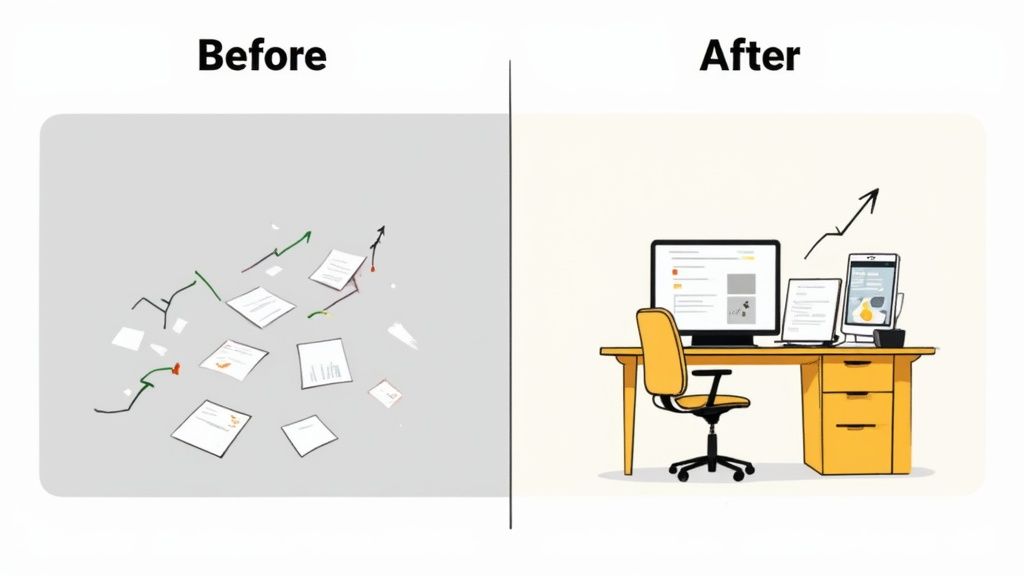
This format shines when you need to demonstrate impact with tangible evidence. It’s ideal for educators showing progress over time and for players keen on understanding strategic milestones.
How It Works
- Select a representative case—choose a beginner or advanced puzzle scenario
- Describe the initial state—highlight challenges and constraints
- Detail the solution steps—show moves, heuristics and decision points
- Present the outcomes—include metrics like time saved or success rate
- Summarise key lessons and next steps for replication
Actionable Tips
- Use specific metrics and clear timelines to quantify results
- Include both setbacks and resolutions for authenticity
- Explain environmental variables such as board size or rule variants
- Secure permission and testimonials to build trust
- Add before/after images or annotated screenshots for visual proof
- Link to a full process guide for readers seeking in-depth workflows
- Highlight any unexpected insights that arose during the case
This style remains popular thanks to HubSpot and Basecamp. It deserves its place in this roundup for its ability to build trust, inspire through proven examples and guide readers step by step through real transformations.
Learn more about Case Studies and Before/After Format on queens.game: https://queens.game/blog/case-studies-format
8. Podcast and Audio Guide Format
Podcast and Audio Guide Format delivers how to guides in audio format, ideal for mobile consumption and multitasking. Listeners can follow hands-free tutorials during their commute or workout, and visually impaired users benefit from an accessible, spoken-word experience.
This approach thrives on conversational storytelling, mixing clear instructions with immersive sound design. You can pause, rewind or skip to chapters, making it flexible for both beginners and advanced puzzle solvers seeking pattern recognition insights.
How It Works
- Plan your episode script with clear objectives
- Record in a quiet environment, adding chapter markers for each segment
- Edit audio with subtle background music to maintain engagement
- Publish on Spotify, Apple Podcasts or Audible and include detailed show notes
Actionable Tips
- Use a natural, friendly tone to keep listeners engaged
- Break content into 5–10 minute segments aligned with puzzles or concepts
- Provide companion transcripts to improve accessibility and SEO
- Invite guest experts, such as algorithm designers, for added authority
- Cross-promote episodes on social media and puzzle forums
- Include timestamps in show notes so learners can jump to specific steps
Podcast and audio guides join your how to guides toolkit by catering to on-the-go learners and diversifying content delivery. Learn more about Podcast and Audio Guide Format on queens.game/podcast
9. Checklists and Template Format
Checklists and Template Format is a minimalist how-to guide that delivers actionable checklists and downloadable templates users can implement immediately. It emphasises practical assets over lengthy explanations, making it perfect for Queens Game tutorials, educator lesson plans or daily puzzle routines.
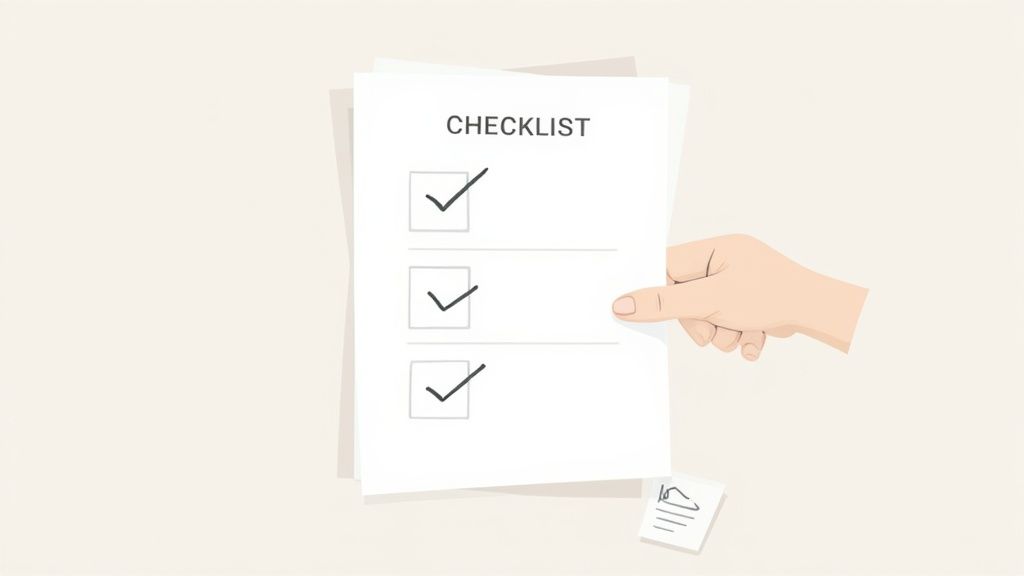
This format thrives on clarity and reusability, letting puzzlers and trainers skip setup and dive straight into n-Queens challenges or classroom assessments. Popularised by Asana, Notion, Canva and HubSpot, it turns abstract processes into ready-to-use tools.
How It Works
- State the template’s purpose and estimated time-to-complete
- Present a concise checklist of tasks (for example “place 8 queens without conflicts”)
- Offer multiple file formats (CSV, PDF, Notion) for flexible use
- Include a sample filled-in version for reference
- Gate templates behind a simple email signup or download link
Actionable Tips
- Write specific steps, e.g. “initialise 8×8 grid in Excel”
- Keep the intro to one sentence, outlining context and outcome
- Provide customisation options like colour-coded sections
- Add clear time estimates, for example “Setup in 5 minutes”
- Link to your master template library on queens.game for further expansion
Checklists and Template Format earns its spot for rapid adoption and consistent results. Users spend less time preparing and more time solving, teaching or iterating. Learn more templates at https://queens.game/templates.
10. Slide Deck and Presentation Format
Slide Deck and Presentation Format how to guides combine striking visuals with sequential explanations, perfect for both live presentations and self-paced learning. You present one concept per slide, guiding beginners through the basics of the n-Queens problem or walking advanced users through constraint propagation algorithms.
This format shines when you need a visually engaging and highly structured walkthrough. Use it to deliver TED Talk-style tutorials on pattern recognition or company training sessions on backtracking strategies.
How It Works
- Define your core message – one idea per slide
- Follow the 5/5/5 rule – 5 words per bullet, 5 bullets per slide, 5 slides per minute
- Apply consistent branding – uniform fonts, colour palette and logo placement
- Populate speaker notes – add reminders, transitions and timing cues
- Rehearse slide order and delivery to ensure smooth flow
Actionable Tips
- Use high-contrast images and minimal text to keep attention
- Embed short animations or GIFs demonstrating queen placements
- Keep headings clear and legible – no smaller than 24 pt
- Include a summary slide with links to puzzles or downloads
- Finish with a strong call-to-action, such as “Play daily puzzles on queens.game”
Popularised by TED Talks, Slideshare and Google Slides, this style deserves its place in any roundup of how to guides. It balances design and detail, ensuring audiences visualise each step while following logical progressions.
Learn more about creating powerful slide decks on queens.game: https://queens.game/resources/slides
11. Community-Driven and Crowdsourced Format
Community-Driven and Crowdsourced Formats harness the power of collective knowledge to create dynamic how to guides. Contributors from around the world add, refine and update content in real time. This approach leverages diverse expertise—from casual enthusiasts to domain experts—ensuring solutions stay current and relevant.
This format shines when you need diverse perspectives and continuous improvement, allowing each contributor to build on prior answers and refine strategies for problems like the n-Queens puzzle.
How It Works
- Establish clear community guidelines and a code of conduct
- Invite contributions through forums, Q&A threads or pull requests
- Moderate submissions and verify solutions for accuracy
- Implement version control to track edits and archive outdated approaches
- Encourage peer review and expert validation
Actionable Tips
- Set transparent quality criteria to maintain consistency
- Use reputation systems to recognise top contributors
- Create feedback loops with upvote/downvote or comment features
- Appoint moderators or maintainers for oversight
- Archive or flag obsolete solutions to avoid confusion
This style has been popularised by Stack Overflow, Reddit and Wikipedia. It earns its place in this lineup for fostering engagement, tapping into real-world experience and keeping how to guides up to date with evolving best practices.
Learn more about Community-Driven and Crowdsourced Formats on queens.game: Explore community guides
12. Conversational and Narrative Format
Conversational and Narrative Format transforms a “how to guides” experience into a friendly dialogue or unfolding story. Instead of rigid steps, it weaves personal anecdotes, mentor-style commentary and direct questions to draw readers into the logic-puzzle journey. This approach has been popularised by writers such as Mark Manson, Paul Graham, Brené Brown and Derek Sivers, who blend expertise with personality to teach complex ideas effortlessly.
How It Works
- Establish a relatable narrator voice – imagine guiding a friend through the n-Queens problem
- Sprinkle in personal anecdotes – share real wins, missteps and aha moments
- Use rhetorical questions and direct “you” address to provoke reflection
- Organise content into mini-stories or scenes under clear headers
- Conclude each narrative beat with a concise takeaway or prompt
Actionable Tips
- Write in first person to build intimacy and trust
- Include brief dialogue lines or sidebars for variety
- Address reader worries directly, eg “You might ask…”
- Keep paragraphs short and punchy – no walls of text
- Inject light humour to maintain engagement
This format excels when you want to humanise abstract algorithms or make “how to guides” feel like a chat with a mentor. It’s perfect for educators aiming to bring constraint propagation or pattern recognition strategies to life. Conversational and Narrative Format deserves its place in this roundup for its unique power to inspire, connect and teach in a single compelling thread. Learn more on queens.game: https://queens.game/blog/narrative-guides
Comparison of 12 How-To Guide Formats
| Format | Implementation Complexity 🔄 | Resource Requirements ⚡ | Expected Outcomes ⭐ / 📊 | Ideal Use Cases 💡 | Key Advantages ⭐ | |---|---:|---:|---|---|---| | Step-by-Step Written Guides | 🔄🔄 (moderate) | ⚡ (low) | ⭐⭐⭐ · High clarity and reproducibility 📊 | DIY, technical procedures, documentation | ⭐ Easy to follow; searchable; easy to update | | Video Tutorials | 🔄🔄🔄 (high) | ⚡⚡⚡ (high) | ⭐⭐⭐⭐ · Strong engagement & retention 📊 | Hands-on demos, timing/technique tasks, onboarding | ⭐ Visual demonstration; engaging; shows timing | | Infographics & Visual Diagrams | 🔄🔄🔄 (moderate-high) | ⚡⚡ (medium) | ⭐⭐⭐ · Fast comprehension; high shareability 📊 | Concept summaries, social sharing, quick overviews | ⭐ Scannable; language-light; visually persuasive | | Interactive Tutorials & Simulations | 🔄🔄🔄🔄 (very high) | ⚡⚡⚡ (high) | ⭐⭐⭐⭐ · Best for skill acquisition; measurable results 📊 | Coding, language learning, simulations, assessments | ⭐ Immediate feedback; tracks progress; engaging | | Listicle Format (Numbered Lists) | 🔄 (low) | ⚡ (low) | ⭐⭐ · Highly scannable; good click-through 📊 | Quick tips, SEO-driven content, social posts | ⭐ Digestible; SEO-friendly; shareable | | FAQ Format | 🔄🔄 (low-medium) | ⚡ (low) | ⭐⭐ · Direct answers reduce support load 📊 | Support centers, onboarding, product docs | ⭐ Concise; searchable; easy to update | | Case Studies & Before/After | 🔄🔄🔄 (medium-high) | ⚡⚡ (medium) | ⭐⭐⭐⭐ · Persuasive with real metrics 📊 | Sales enablement, marketing, proof-of-concept | ⭐ Credibility; context-rich; memorable | | Podcast & Audio Guides | 🔄🔄 (moderate) | ⚡⚡ (medium) | ⭐⭐ · Good for engagement; less referenceable 📊 | Commuter learning, interviews, conceptual topics | ⭐ Personal connection; mobile-friendly; lower video cost | | Checklists & Templates | 🔄 (low) | ⚡ (low) | ⭐⭐⭐ · Immediately actionable; time-saving 📊 | Project launches, repeatable workflows, productivity | ⭐ Practical; reusable; drives execution | | Slide Deck & Presentation | 🔄🔄 (moderate) | ⚡⚡ (medium) | ⭐⭐ · Good for live delivery and summaries 📊 | Workshops, webinars, executive briefings | ⭐ Professional; adaptable for live or self-serve | | Community-Driven / Crowdsourced | 🔄🔄 (medium) | ⚡⚡ (medium) | ⭐⭐⭐ · Diverse solutions; continuously updated 📊 | Niche problems, peer support, evolving docs | ⭐ Collective knowledge; scalable; low content cost | | Conversational & Narrative | 🔄🔄 (moderate) | ⚡⚡ (medium) | ⭐⭐ · Highly engaging and memorable 📊 | Thought leadership, onboarding, beginner guides | ⭐ Relatable; builds trust; enjoyable to read |
Take Your Next Move
Now that you’ve explored 12 distinct how to guides for every Queens Game learner and educator, choose the formats that suit your style. Put these tactics into practice, track your progress, and revisit any section as you refine your strategy and teaching resources.
Key Takeaways
Below we distil the core insights from each how to guide. Use this summary as your quick-reference roadmap.
- Step-by-step written guides deliver granular clarity in less than 30 minutes of reading.
- Video tutorials combine sight and sound to reinforce learning in real time.
- Infographics highlight spatial patterns and queens placement logic for quick reference.
- Interactive simulations let you practise backtracking and constraint propagation hands-on.
- Checklists and templates help students and educators track progress during every session.
- Podcasts and audio guides reinforce algorithmic methods during commutes and workouts.
- Community-driven lessons introduce fresh perspectives and peer-to-peer problem solving.
- Case studies and narratives illustrate before-and-after strategy improvements concretely.
"By choosing a how to guide that fits your learning style, you set the stage for rapid improvement in Queens Game skills."
Actionable Next Steps
Concrete steps help you move from theory to practise swiftly. Tackle these items in sequence or tailor them to your own pace. Feel free to mix and match tactics to fit your evolving needs.
- Choose 2–3 guide formats that match your preferred learning style and schedule.
- Schedule daily practice drills with a mix of beginner tasks and intermediate puzzles.
- Integrate advanced algorithmic methods by following constraint propagation worksheets.
- Download and adapt educator templates to structure lessons or self-assessment quizzes.
- Join the community-driven forum to share progress, discuss heuristics, and collaborate.
- Revisit video and infographic resources weekly to reinforce spatial reasoning and tactics.
Why Mastery Matters
Investing time in mastering these approaches yields compounding benefits. Improved problem solving enhances memory retention and cognitive flexibility. By documenting your journey through checklists and reflections, you deepen understanding and fuel motivation.
Broader Impact
The techniques you learn go beyond the Queens Game board. They build cognitive skills with long-term payoff.
- Strategic planning and foresight applicable to project management.
- Pattern recognition skills that speed up data analysis tasks.
- Collaborative problem solving that thrives in team-based environments.
- Algorithmic thinking useful for coding, research or operational optimisation.
Final Thought
Embrace every learning format as a stepping stone to deeper understanding and keep moving forward with confidence in your next move. Remember that consistent practice and variety of formats accelerate retention and enjoyment.
Ready to level up your Queens Game experience? Discover comprehensive how to guides, interactive puzzles and advanced tutorials all in one place at Queens Game. Start your journey today at Queens Game and transform your puzzle-solving skills.